
Indoor Wicker Counter Stools For Contemporary Commercial Interiors
The right counter seating does more than provide a place to sit.
It helps define the atmosphere of a restaurant, creates a welcoming breakfast area, and adds visual character to a kitchen island or hospitality counter.
For commercial buyers seeking a blend of natural texture and modern style, indoor wicker counter stools offer an appealing alternative to conventional metal, plastic, or fully upholstered seating.
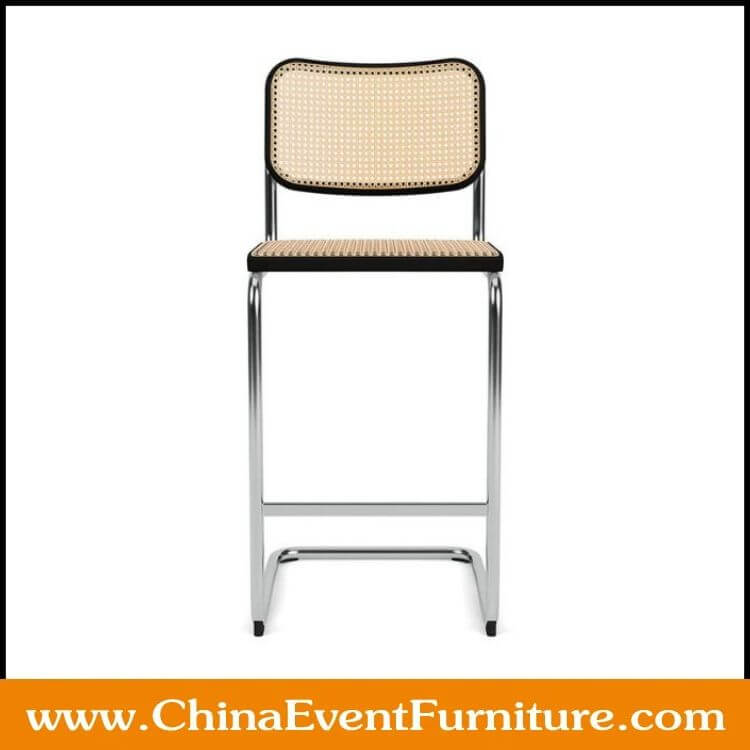
The product shown in the image features a light woven backrest and seat, contrasting dark edging, and a slim metal frame with a reflective chrome-like finish.
Its simple silhouette combines two design elements: the warmth of woven material and the clean look of polished metal.
This combination allows the stool to work in interiors that favor natural materials without looking overly rustic.
For restaurant furniture wholesalers, hospitality suppliers, interior designers, and commercial project buyers, this style offers opportunities across several market segments.
It can complement contemporary cafés, casual dining restaurants, residential kitchen islands, boutique hotels, and indoor bar areas where seating needs to look attractive while fitting into a coordinated furniture scheme.
1. Natural Texture Meets Modern Metal
The most distinctive feature of this counter stool is the contrast between its woven seating surfaces and its metallic structure.
The backrest has a rounded rectangular shape with gently curved upper corners. Its light beige woven center creates a natural visual texture, while the dark outer border gives the design a defined outline.
Rather than using a bulky upholstered back, the stool relies on the pattern and color of the woven material to create interest.
The seat follows the same design language. A light woven surface is framed by a dark edge, visually connecting it with the backrest.
This repeated detail makes the overall design feel coordinated rather than assembled from unrelated components.
The metal frame is another important part of the appearance. Its narrow vertical supports keep the profile visually open, while the lower crossbars provide structural connections and create a footrest area.
The reflective finish introduces a contemporary accent that contrasts with the softer, more organic appearance of the woven panels.
Based on the photograph, the frame appears to have a chrome-style finish.
However, the exact metal type, woven material, internal seat construction, and surface treatment should be confirmed with the manufacturer before being included in technical specifications.
This combination makes the product particularly relevant to buyers searching for indoor wicker counter stools that feel lighter and more contemporary than traditional solid-wood bar seating.
2. Why Indoor Wicker Counter Stools Suit Modern Interior Design
Natural-looking materials remain useful in interior design because they soften spaces dominated by hard surfaces.
Metal counters, stone worktops, glass partitions, and tiled floors can create a clean appearance, but they may also make a room feel visually cold.
Woven seating introduces a different texture without requiring a large amount of additional decoration.
On this stool, the pale woven panels provide a warm contrast to the metal frame, while the dark edging connects the two materials visually.
The result is a versatile style that can complement several interior directions.
In a contemporary café, the stools can be paired with a light stone counter, neutral walls, and simple pendant lighting.
In a boutique hotel, they can support a relaxed yet refined breakfast-bar atmosphere. In a residential kitchen, the woven texture can balance smooth cabinetry and stainless steel appliances.
For commercial interior designers, this adaptability is valuable.
A stool that fits multiple design schemes can simplify furniture selection across different projects, particularly when a client wants a modern space that does not feel excessively industrial.
Indoor wicker counter stools can also be combined with wood, marble-effect surfaces, black metal accents, or neutral upholstered furniture.
Their visual character is distinctive enough to contribute to a room but restrained enough to avoid overwhelming the overall design.
3. Woven Backrests And Seats: Texture That Adds Character
The woven elements are central to this product’s identity.
Unlike a completely smooth plastic seat or a fully upholstered chair, a woven surface creates a visible pattern that adds depth and detail.
The light-colored weave shown in the photograph creates a natural, understated appearance.
It can coordinate with cream, beige, white, light oak, and other neutral finishes commonly used in hospitality interiors.
The backrest is especially important because it remains visible above the counter line.
Even when the seat is partly concealed by the counter, the rounded woven panel contributes to the overall appearance of the space.
Repeating several stools along a counter can create a consistent rhythm of light woven surfaces and slim metallic frames.
The woven seat also contributes to the product’s visual differentiation.
For furniture retailers and wholesalers, this can help position the stool within a natural-texture or contemporary hospitality collection rather than among ordinary metal bar stools.
However, the exact performance of the woven material depends on its construction.
Natural cane, synthetic wicker, and other woven materials have different characteristics in terms of cleaning, moisture tolerance, flexibility, and long-term maintenance.
Buyers should confirm the actual material and care instructions rather than assuming that every woven surface has the same properties.
For indoor commercial applications, this information is particularly important when selecting furniture for busy restaurants, cafés, or hotel breakfast areas.
4. A Streamlined Metal Frame For A Lighter Visual Profile
The metal frame gives the stool a different character from traditional wicker furniture built around a substantial wooden structure.
Its slim legs create an open appearance beneath the seat, allowing more of the floor and surrounding furniture to remain visible.
This can be useful in smaller cafés, apartment kitchens, and compact hospitality spaces where bulky seating may make the interior feel crowded.
The reflective finish adds a clean, contemporary accent. It can coordinate with chrome faucets, stainless steel appliances, metal counter details, and other polished hardware.
This makes the stool particularly suitable for interiors that combine natural textures with modern finishes.
The lower frame incorporates horizontal crossbars that also serve as a footrest area.
For counter seating, a footrest is a practical design consideration because it gives seated users a place to support their feet rather than leaving their legs hanging freely.
For commercial buyers, the frame’s construction deserves close attention.
Before ordering, confirm the frame material, tube dimensions, joining method, finish specification, maximum load capacity, and any relevant stability or durability testing.
These details matter more in commercial settings, where furniture may be moved and used repeatedly throughout the day.
The photograph communicates the design concept, but it does not independently establish a specific load rating or certification.
5. Indoor Wicker Counter Stools For Restaurants And Cafés
Restaurants and cafés are natural applications for this style of seating, particularly where the counter is an important part of the customer experience.
In a café, counter stools can be arranged along a window-facing bar, a communal counter, or a compact dining ledge.
The woven backrests introduce texture, while the metal frame maintains a contemporary look that works with many modern café interiors.
In casual restaurants, they can provide seating at counter-height dining areas or designated bar sections.
Their restrained color palette can be coordinated with wood tables, neutral wall finishes, and simple decorative accessories.
The style may also suit brunch cafés and coffee shops that use natural materials to create a relaxed atmosphere.
Paired with timber surfaces and warm lighting, the woven panels can make the space feel more inviting than an all-metal seating arrangement.
For restaurant operators, the key purchasing consideration is the relationship between appearance and practical use.
Counter stools must match the counter height, allow enough room between seats, and be appropriate for the expected frequency of use.
Before selecting a model, measure the counter height and compare it with the stool’s actual seat height.
A stool designed for a standard kitchen island may not fit a higher commercial bar counter.
Also confirm the overall width and depth so that multiple stools can be arranged without restricting customer movement.
6. A Natural Choice For Kitchen Islands And Breakfast Counters
Although indoor wicker counter stools can be used in commercial environments, they are also suitable for residential furniture collections.
Kitchen islands frequently serve several purposes: food preparation, casual dining, conversation, and informal work.
Seating around the island should therefore complement the kitchen design while remaining practical for everyday use.
The light woven seat and backrest shown here can soften a kitchen with white cabinetry, stone countertops, or stainless steel appliances.
The dark trim adds definition, while the metallic frame connects with modern kitchen hardware.
The stool’s open structure can also help a kitchen appear less crowded than one furnished with large, solid-backed seats.
This is particularly useful in apartments and open-plan homes where the kitchen, dining area, and living room share one visual space.
For furniture retailers, this broader residential appeal can be useful when developing a collection that serves both home furnishing stores and commercial furniture buyers.
Nevertheless, the correct seat height remains essential.
Buyers should verify the product dimensions instead of relying on the general label “counter stool,” since counter-height and bar-height seating are not interchangeable.
7. Indoor Wicker Counter Stools For Hotels And Boutique Hospitality Projects
Hotels often use counter seating in breakfast areas, lounge counters, compact dining spaces, and guest-room kitchenettes.
In these settings, furniture must support the intended interior style without creating visual clutter.
The woven backrest of this stool offers a decorative detail that can work well in boutique hotels, contemporary serviced apartments, and hospitality projects that incorporate natural textures.
For example, a hotel breakfast counter with wood finishes and warm neutral colors could use woven counter stools to reinforce a relaxed atmosphere.
A more contemporary interior could combine them with stone-effect counters, polished metal fixtures, and minimalist lighting.
The stool may also suit selected indoor lounge or refreshment areas where guests need short-term seating at a counter.
Whether it is appropriate for a particular project depends on the final dimensions, comfort requirements, construction, and applicable commercial standards.
Hospitality procurement teams should assess the product as part of the complete interior specification.
Color consistency, frame finish, material suitability, replacement-part availability, and the ability to reorder matching products may all affect long-term purchasing decisions.
8. Comfort And Ergonomics: Details Buyers Should Check
Visual appeal is only one part of a successful counter stool. Comfort depends on several dimensions and construction details that are not fully visible in a product photograph.
First, the seat height must correspond to the counter. There should be enough clearance between the seat and the underside of the counter for users to sit comfortably.
Buyers should also check the seat width and depth, since these affect the available sitting area.
Second, the backrest should provide an appropriate level of support for the intended use.
The product’s rounded rectangular backrest offers a defined contact area, but the amount of support will depend on its height, angle, and position relative to the seat.
Third, the woven surface should be assessed for its firmness, flexibility, and finish quality.
The appearance of a weave does not establish how it will feel after extended use, so requesting a sample or testing a finished product can be valuable for larger orders.
Finally, the footrest should be positioned appropriately for the target user and counter height.
Buyers should confirm the complete product dimensions before finalizing furniture layouts.
These checks are especially useful for restaurants and hotels that want customers to remain comfortable while dining or socializing.
9. Cleaning And Maintenance In Indoor Commercial Settings
Indoor wicker counter stools can be practical for hospitality spaces when the material and construction are suited to the environment and maintained correctly.
Routine cleaning should begin with the manufacturer’s care instructions.
Depending on the woven material, dust may be removed with a soft brush or vacuum attachment.
The frame can generally be cleaned with a suitable soft cloth, but the correct cleaning products depend on the actual metal finish.
Spills should be addressed promptly using a method approved for the woven material.
Harsh chemicals, abrasive pads, or excessive moisture may damage some finishes or fibers, so cleaning procedures should not be assumed to be universal.
Restaurants and cafés should also inspect the seating regularly.
Check for loose joints, damaged weave, sharp edges, worn feet, or signs of finish deterioration.
Any damaged stool should be removed from service until it has been assessed.
For buyers sourcing furniture for multiple locations, clear care instructions can help staff maintain a consistent standard and reduce avoidable damage.
It is also important to distinguish indoor furniture from outdoor-rated furniture.
A woven appearance does not automatically mean that the material is UV-resistant or suitable for rain and humidity.
Unless the manufacturer confirms outdoor suitability, these stools should be specified for indoor use.
10. Choosing Indoor Wicker Counter Stools For Wholesale Orders
For importers, distributors, furniture retailers, and hospitality project suppliers, selecting the right model involves more than comparing the unit price.
Material specifications should be confirmed first.
Ask whether the woven sections use natural cane, synthetic wicker, or another material, and request information about cleaning and expected use conditions.
Frame construction is equally important. Confirm the metal type, finish, dimensions, assembly method, and available test documentation.
These details help buyers evaluate whether the product is suitable for their intended market.
Dimensions and fit should be checked against the planned counter height and available floor space.
Request a dimensioned drawing or specification sheet before placing a bulk order.
Packaging and shipping also matter for imported furniture.
Ask the supplier how the stools are protected during transit, whether assembly is required, how products are packed, and what carton dimensions and shipping quantities apply.
For projects requiring a coordinated appearance, buyers should also confirm the availability of matching colors or complementary seating styles.
Customization may be possible depending on the manufacturer’s production capabilities, minimum order quantity, and order specifications.
A pre-production sample or approved reference sample can help establish the expected appearance and finish before a larger order is manufactured.
For CARGO FURNITURE and other furniture suppliers serving international buyers, clear product specifications and responsive communication can help make the purchasing process more efficient.
Actual lead times, customization options, warranty terms, and shipping arrangements should be confirmed for each order.
11. Why These Wicker Counter Stools Can Add Value To A Furniture Collection
A successful commercial furniture collection usually needs products that appeal to more than one narrowly defined interior style.
This stool’s combination of light woven panels, dark edging, and a metallic frame gives it a recognizable look without relying on an elaborate decorative shape.
For wholesalers, it may fit into a collection serving cafés, casual restaurants, contemporary residential projects, and boutique hospitality interiors.
For interior designers, it offers a way to introduce natural texture into a modern space. For retailers, the design can appeal to customers who want something more visually distinctive than a basic metal counter stool.
The stool’s relatively open frame also makes it easier to coordinate with different counter designs, although final compatibility must be confirmed through measurements and project planning.
Ultimately, the value of indoor wicker counter stools depends on how well their design, construction, and specifications match the needs of the intended buyer.
A well-selected model can help create a consistent interior while giving a furniture collection a balance of contemporary structure and natural-looking detail.
Frequently Asked Questions About Indoor Wicker Counter Stools
What are indoor wicker counter stools?
Indoor wicker counter stools are elevated seats designed for kitchen counters, café counters, and other counter-height surfaces.
They incorporate woven or wicker-style details that add texture and a natural appearance to the seating design. The exact woven material varies by product.
Are these stools suitable for restaurants and cafés?
They may be suitable for restaurants and cafés that need indoor counter seating with a contemporary, natural-inspired appearance.
Buyers should verify the dimensions, construction, maintenance requirements, and suitability for the expected level of commercial use.
What material is used for the woven seat and backrest?
The photograph shows light-colored woven panels, but it does not establish whether the material is natural cane, synthetic wicker, or another woven material.
Confirm the exact material with the supplier before specifying the product.
How do I choose the correct counter stool height?
Measure the counter height and confirm the stool’s actual seat height.
Also check the available clearance beneath the counter and allow sufficient space for comfortable seating and movement.
Can these indoor wicker counter stools be used outdoors?
Do not assume that they are suitable for outdoor use. Outdoor performance depends on the woven material, frame finish, and overall construction.
Unless the supplier confirms outdoor suitability, specify them for indoor environments.
Can wholesale buyers request customization?
Customization depends on the manufacturer’s capabilities and order requirements.
Buyers should ask about available finishes, woven colors, minimum order quantities, sample availability, and production lead times before placing an order.
Source Indoor Wicker Counter Stools For Your Next Project
If you are sourcing indoor wicker counter stools for a furniture collection, restaurant renovation, café opening, hotel project, or wholesale distribution business, start by confirming the specifications that matter most: woven material, frame construction, seat height, overall dimensions, finish, and packaging requirements.
A carefully selected counter stool can help create a welcoming interior while maintaining a coordinated furniture style.
The woven details shown in this design offer a natural visual accent, while the streamlined metal frame supports a more contemporary look.
Contact CARGO FURNITURE to discuss product specifications, wholesale requirements, and availability for your project.
Share your target quantity, preferred finishes, and intended application so the suitable options can be evaluated before ordering.


